
When people think about PTSD, they usually think about memories, flashbacks, or emotions. But in my work at Phoenix Rebellion Therapy, I often meet people whose first clues that something is wrong are in their bodies, not their thoughts.
They come in talking about a stomach that's always in knots, a chest that feels tight for "no reason," headaches that won't go away, or feeling constantly on edge and exhausted. Many of them say some version of:
If any of this sounds familiar, you're not alone, and you're not making it up. PTSD and trauma often show up in the body in powerful ways. In this article, I'll explain in clear, caring language why this happens, what it can look like, and how we can address it together in therapy.
I hope that by the end, you'll better understand what might be happening for you or someone you care about, and maybe feel a bit less alone.
Why Trauma Shows Up in the Body
When something overwhelming or threatening happens, your body's survival system jumps in to protect you. You might have heard of the fight, flight, or freeze response. In a moment of danger, your brain sends signals through your whole body: your heart beats faster, your muscles tense, your breathing changes, and stress hormones flood your system to help you respond.
In a real emergency, this is actually a healthy, life-protecting reaction.
The trouble comes when your body doesn't fully come back down after the danger has passed, or when trauma keeps happening over and over. The nervous system can get stuck in a kind of "always on guard" mode. Even when you're technically safe, your body may still be reacting as if the threat is still there or could appear at any moment.
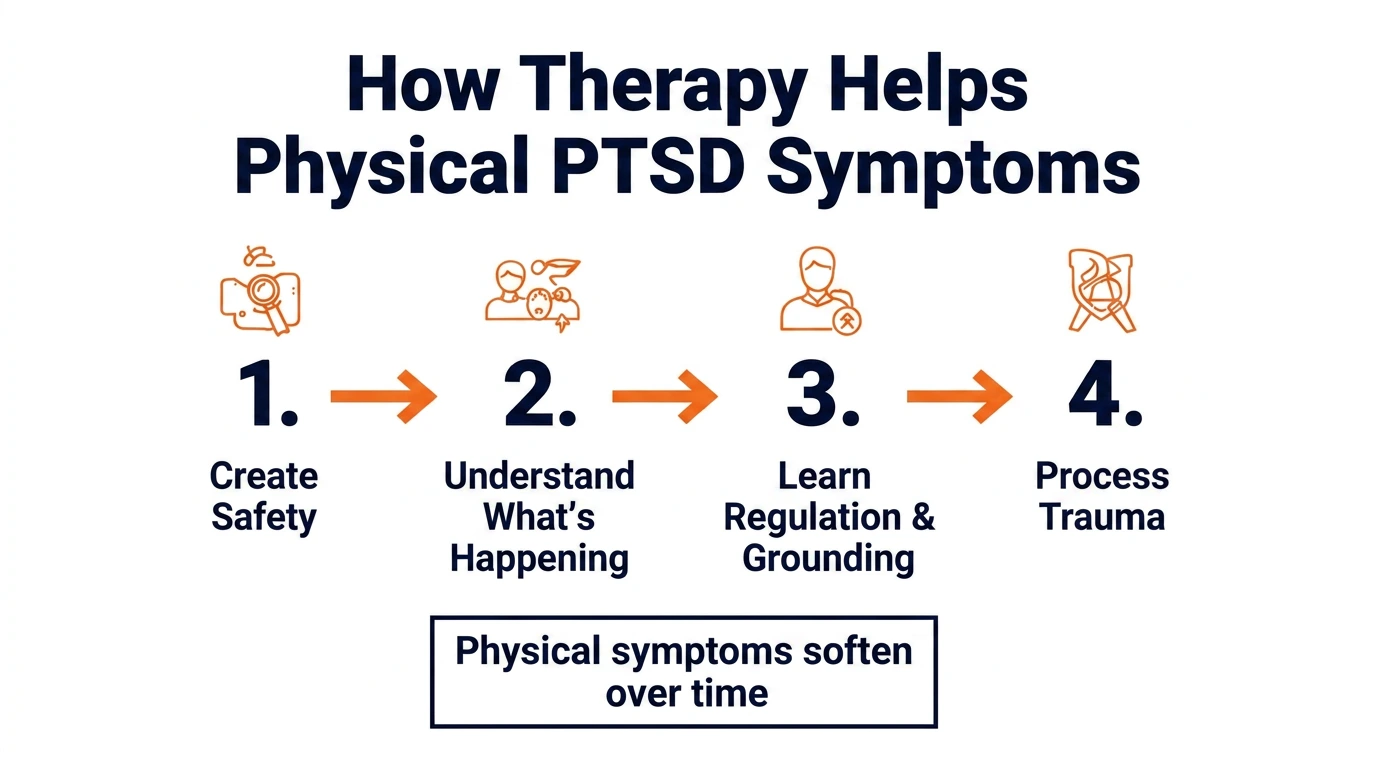
Over time, that constant state of alert can turn into very real physical symptoms—pain, tension, stomach issues, sleep problems, and more. You are not being dramatic, and you're not "too sensitive." Your body has been trying very hard to keep you alive with the tools it had at the time.
Common Ways PTSD Shows Up in the Body
Everyone's body responds to trauma in its own way, but there are some patterns I see again and again in my work.
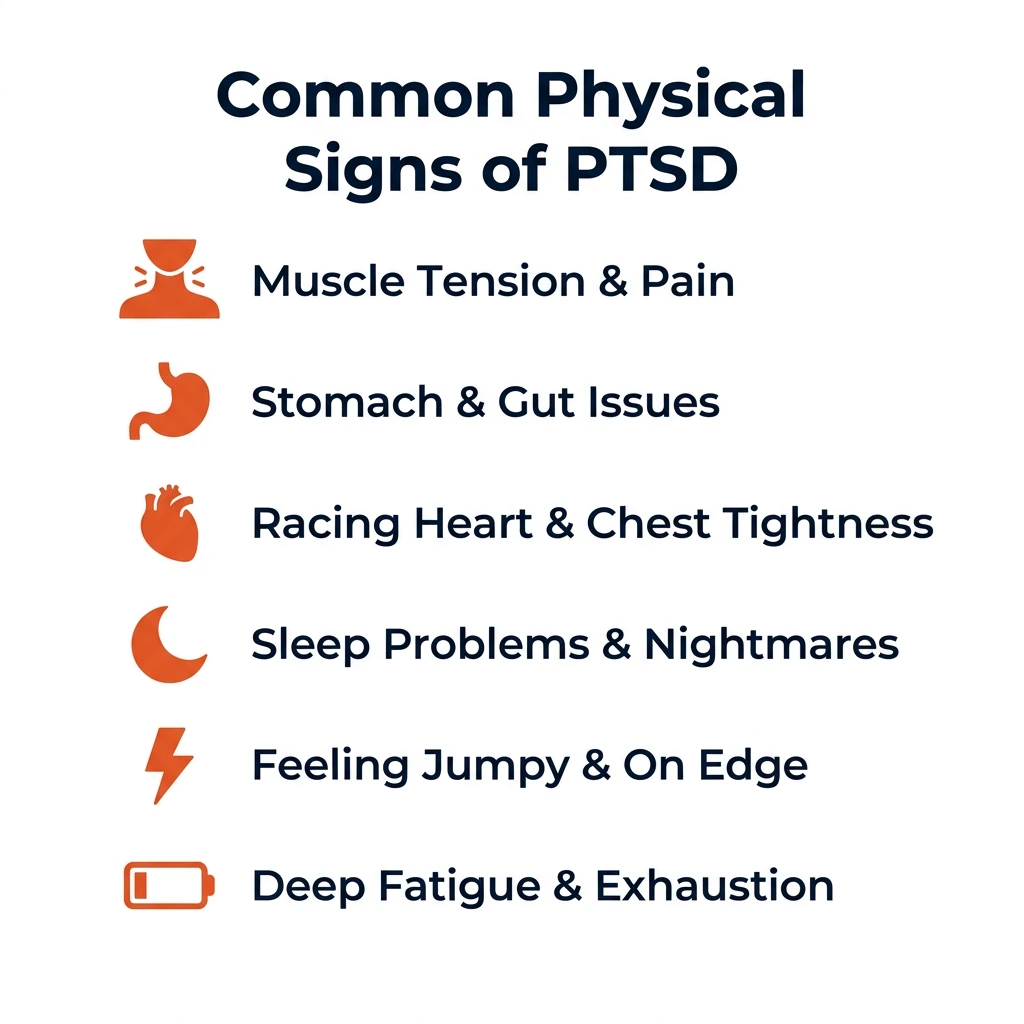
Ongoing Tension and Pain
Many people describe feeling like they can't remember the last time their bodies truly relaxed. Shoulders live up by the ears. Jaws are tight. Backs ache. Sometimes this leads to frequent headaches or migraines.
Stomach and Digestive Problems
The connection between stress and the gut is very real. When you're under constant emotional strain, your digestive system often reacts. You might notice:
- Nausea
- Cramping or "butterflies"
- Constipation, diarrhea, or IBS-like symptoms
- Changes in appetite
Heart, Chest, and Breathing Sensations
Many people with trauma histories experience racing heartbeats, pounding in the chest, or feeling like they can't take a full breath. Sometimes it feels frighteningly similar to a heart attack.
Sleep Problems and Nightmares
Sleep is one of the first places trauma tends to show up. Falling asleep and staying asleep can be hard when your body doesn't feel safe. You might notice:
- Taking a long time to fall asleep
- Waking up often during the night
- Nightmares or intense, disturbing dreams
- Waking up already tense, tired, or on edge
Feeling Jumpy or "On Edge"
Another very common sign is feeling easily startled. Maybe loud noises make your whole body jump. Maybe you find yourself always scanning for exits, or tensing up when someone approaches you from behind.
Fatigue and Exhaustion
Living this way — tense, watchful, and activated — takes a huge amount of energy. Many people with PTSD feel deeply tired, even if they haven't done anything particularly strenuous.
"Is It PTSD or Something Physical?"
A question I hear often is:
My honest answer is: you deserve to take all symptoms seriously. It's not an either/or situation.
I usually encourage people to do both:
- Get checked out by a medical provider to rule out or treat any physical conditions.
- At the same time, explore how stress and trauma may be affecting your body.
You are allowed to care about your physical health and your mental health at the same time. They're deeply connected.
You Don't Have to Navigate This Alone
At Phoenix Rebellion Therapy, we help people understand how trauma shows up in the body and build a path toward healing.
Schedule an AppointmentHow I Think About the Mind–Body Connection
At Phoenix Rebellion Therapy, we don't see trauma as "just in your head." We see it as something that affects your whole self: your thoughts, emotions, relationships, and definitely your body too.
One frame that's often helpful is to think about the nervous system as having two main modes:
- A more activated mode (fight/flight), where your body is ready for danger.
- A calmer "rest and digest" mode, where your body can repair, digest, and restore.
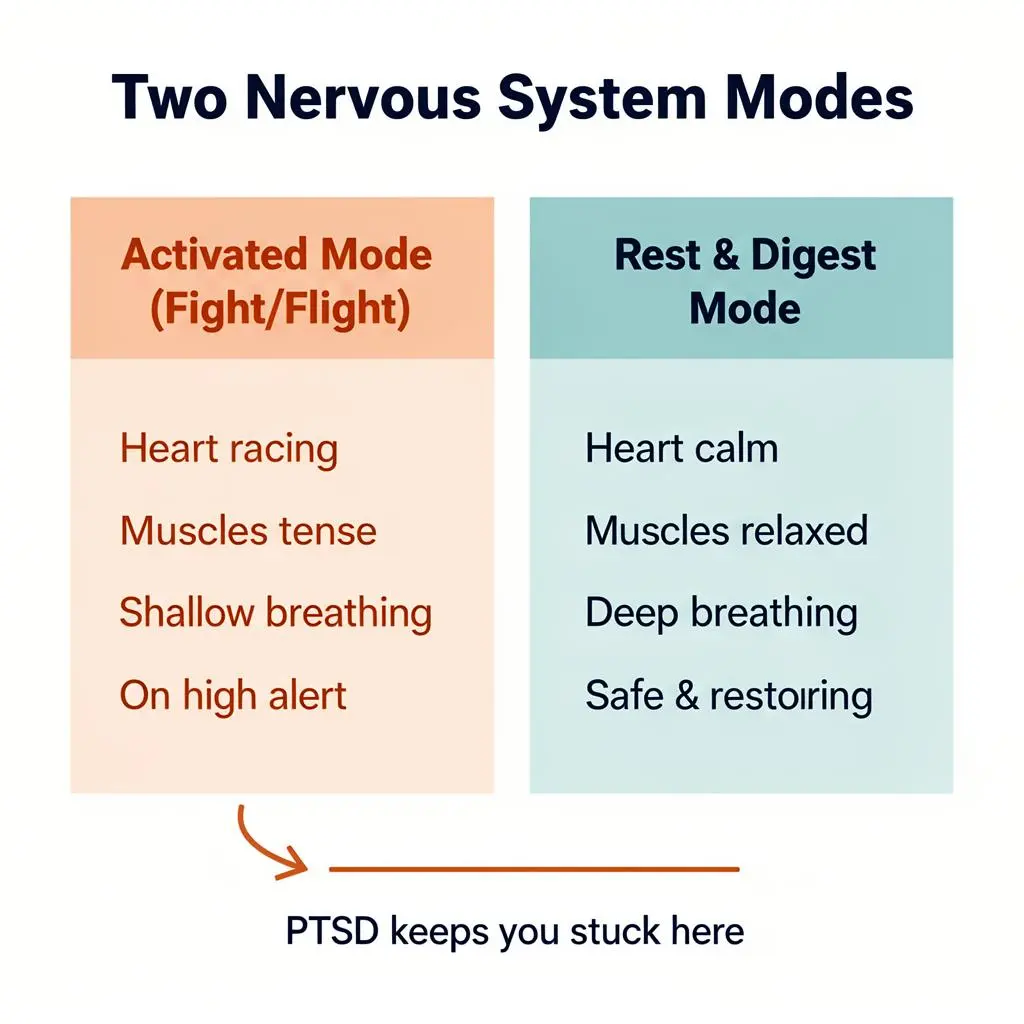
With PTSD, your system can get stuck spending too much time in that activated mode. In therapy, part of our work is to help your body slowly remember what it feels like to be safe enough to return to rest and digest more often.
How Therapy Can Help with Physical Symptoms of PTSD
The good news is that the nervous system is not frozen in time. It can learn new patterns. The body can soften, heal, and adapt.
Here are some ways we tend to work with physical symptoms of trauma in therapy.
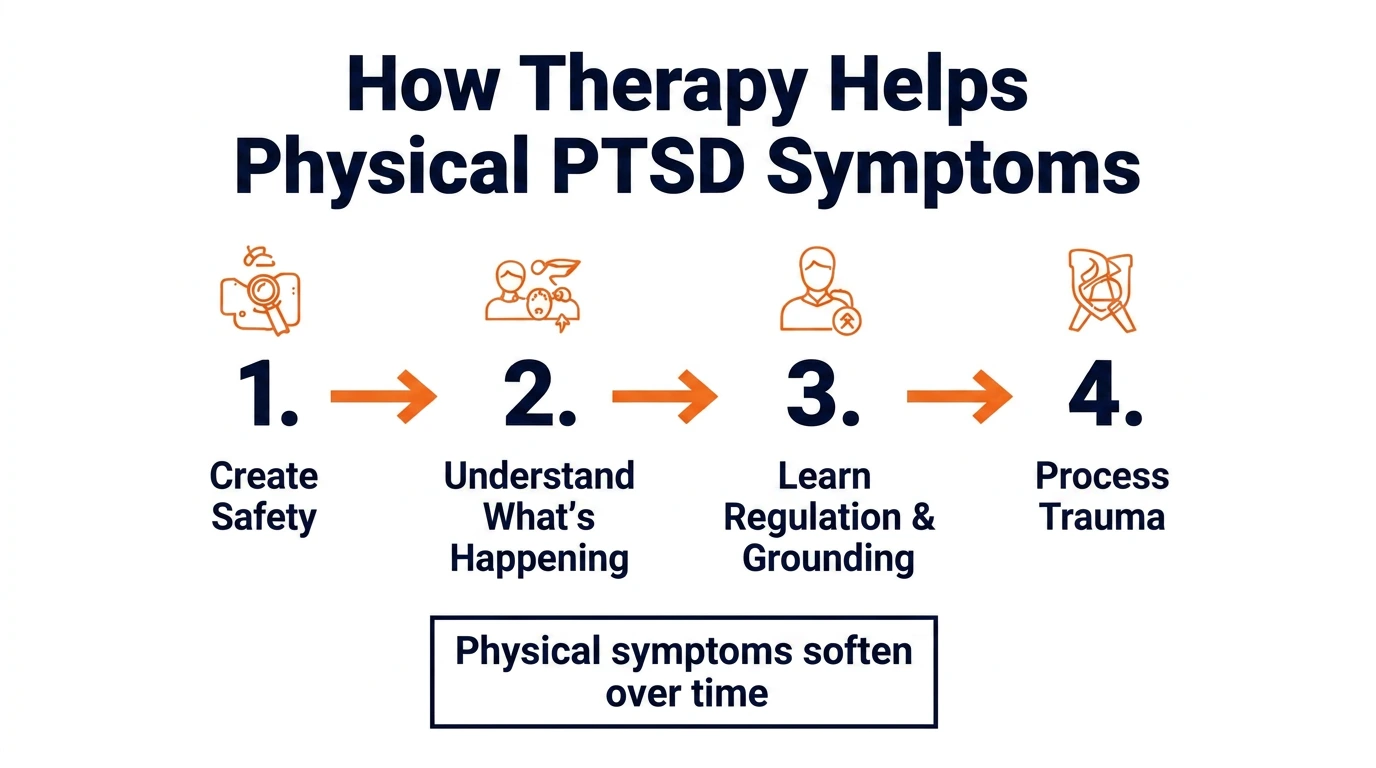
Creating Safety First
Before we dive into tools or trauma processing, we focus on safety. That means:
- Listening to your story at your pace
- Believing your experience
- Putting words to what has been happening in your body without judgment
Trauma-Focused Therapy Approaches
Depending on what feels right for you, we may also use trauma-focused approaches such as trauma-informed talk therapy, EMDR, or other evidence-based methods.
Many clients also find cognitive behavioral therapy helpful alongside this work.
You Are Not Broken
If you recognize yourself in any of this, I want you to hear this clearly:
You are not broken. You are not "too much." Your body is not your enemy.
Your body has been doing its best to survive in situations that were overwhelming, frightening, or unsafe. The ways it learned to protect you may be causing you pain now — but they made sense at the time.
With care, patience, and the right support, your body can learn new ways to exist. Physical symptoms can soften. Sleep can slowly improve. It can become possible to feel more at home in yourself.
How We Can Support You at Phoenix Rebellion Therapy
At Phoenix Rebellion Therapy, we work with trauma every day. We understand how discouraging it can be to feel like your body is constantly reacting in ways you don't understand.
When you work with us, we will:
- Take your physical symptoms seriously and never brush them off as "just in your head"
- Move at a pace that feels safe and respectful to you
- Offer practical tools for your day-to-day life, not just insight
- Work alongside you as a partner in healing, not as someone who needs to be "fixed"
If you're noticing physical symptoms that you suspect might be connected to trauma, reaching out for help is a powerful and courageous step. You don't have to figure this out alone.
Ready to Start Your Healing Journey?
We offer in-person sessions at both our Murray and Kaysville office locations, as well as virtual sessions over secure video conferencing from anywhere in Utah.
Schedule an Appointment