
A lot of people have told me something like, "I know they care about me, but if they don't text me back, I feel like I'm nothing." I know what they look like after they say this: scared, ashamed, and really wanting to feel safe with someone.
I've come to understand that this sensation frequently corresponds to the anxious preoccupied attachment style.
I want to talk to you in this article, almost like we're writing in a journal together. I'll talk about what this attachment style is, how it usually shows up, what can set it off, and what healing can look like. I'll also tell you what I/we see over and over again at Phoenix Rebellion Therapy.
What Is Anxious Preoccupied Attachment?
Attachment theory started with a psychiatrist named John Bowlby and was expanded by Mary Ainsworth. The basic idea is simple: the way our caregivers treated us when we were young shapes how we relate to others as adults.
Anxious preoccupied attachment is one kind of insecure attachment. People with this style usually want closeness very badly, but they don't feel sure they can keep it. On the outside, others might call them "needy" or "clingy." On the inside, it feels more like, "I'm fighting for this relationship and I'm terrified of losing it."
Research suggests that about 20–25% of adults in Western countries fit an anxious attachment pattern. So if you see yourself in this, you are not alone.
How This Style Often Starts
In my work, anxious attachment typically does not emerge spontaneously. It often comes from having caregivers who aren't always there for you. They were sometimes loving and there. At other times, they were stressed, distracted, or emotionally distant.
As a child, this can be very confusing. You might think, "Will you be there for me this time, or not?" To try to feel safer, many children start to watch their caregivers very closely. They try to please, stay close, or do whatever it takes to keep attention.
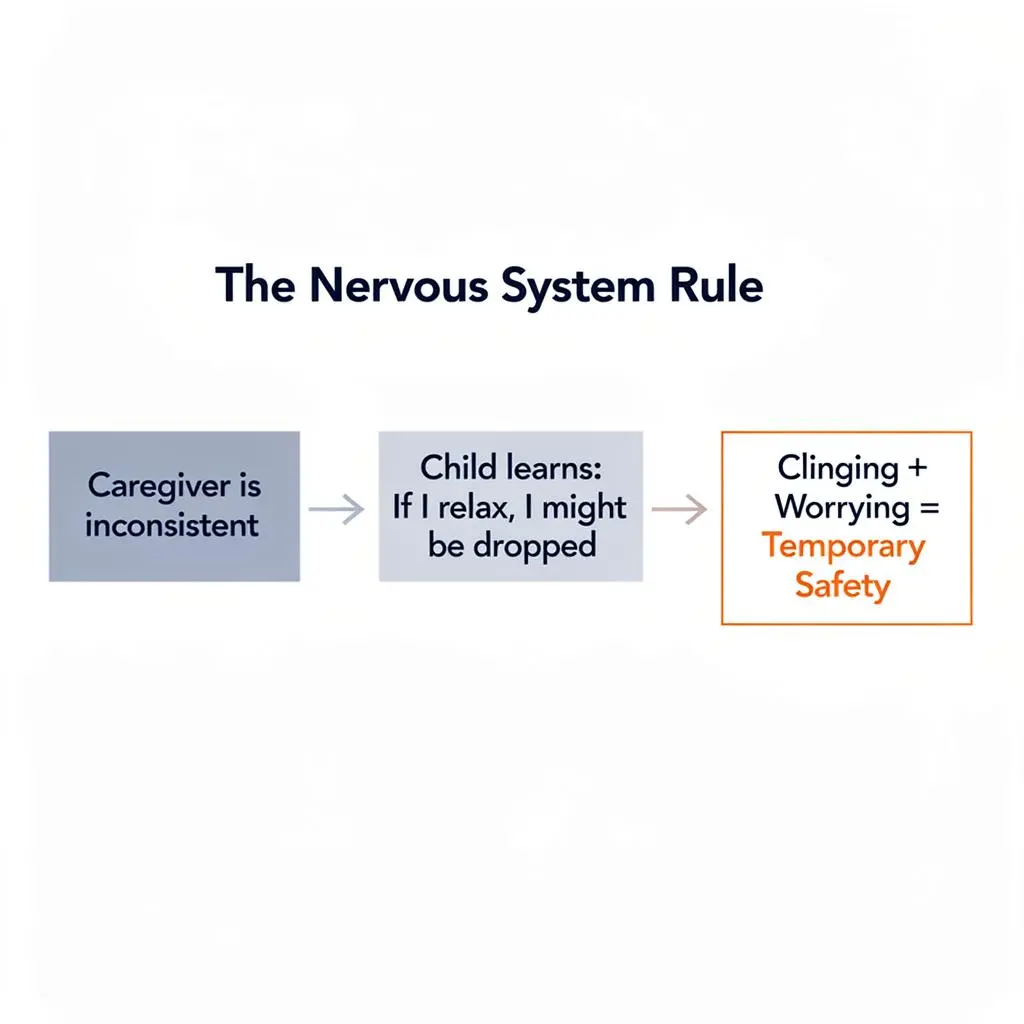
The nervous system learns a rule: "If I relax, I might be dropped. If I cling, worry, or work extra hard, maybe they'll stay." This pattern can follow us into adult life.
What It Feels Like From the Inside
When people with anxious attachment talk in therapy, I often hear similar thoughts:
The feelings move up and down very fast. When things feel close and loving, there can be a sense of joy and relief. When there is distance or silence, there can be panic, sadness, or even anger.
This is not just in the mind. The body reacts too: a fast heartbeat, tight chest, upset stomach, or trouble sleeping. Many clients tell me, "I know I'm overreacting, but I can't stop it." To me, this shows how deep and automatic the pattern is.
Common Signs of Anxious Preoccupied Attachment
You might notice yourself:
- Worrying a lot that people will leave you
- Asking for reassurance that you are loved or that the relationship is okay
- Replaying conversations in your head and looking for what you did "wrong"
- Getting attached very quickly in new relationships
- Struggling to set boundaries because you are afraid of pushing people away
- Feeling very upset when a partner pulls back, cancels plans, or seems distant
- Blaming yourself whenever a relationship feels shaky
Not everyone will have all of these signs. But if several fit, anxious attachment may be part of your story.
Triggers: What Sets Off the Alarm
In therapy, we often map out triggers together. These are the moments when your attachment system goes into high alert.
Common triggers include:
- No response to a text or call
- Sudden changes in routine, like no goodnight text
- Short or cold‑sounding messages
- Conflict, even about small things
- A partner asking for space or alone time
- Feeling compared to others or "less important" than someone else
These moments can wake up old memories of being ignored, criticized, or left alone. Your brain may react to a late text as if it's a life‑or‑death situation, even if part of you knows that's not true.
You Don't Have to Navigate This Alone
At Phoenix Rebellion Therapy, we help people understand their attachment patterns and build healthier, more secure relationships.
Meet Our TeamHow It Affects Relationships
Anxious attachment can create a powerful push–pull pattern in relationships. You may:
- Reach out more and more when you feel distance
- Send long texts to explain your feelings or to try to fix things right away
- Over‑give or over‑share early on to "secure" the relationship
- Stay in relationships that are not healthy because the idea of being alone feels worse
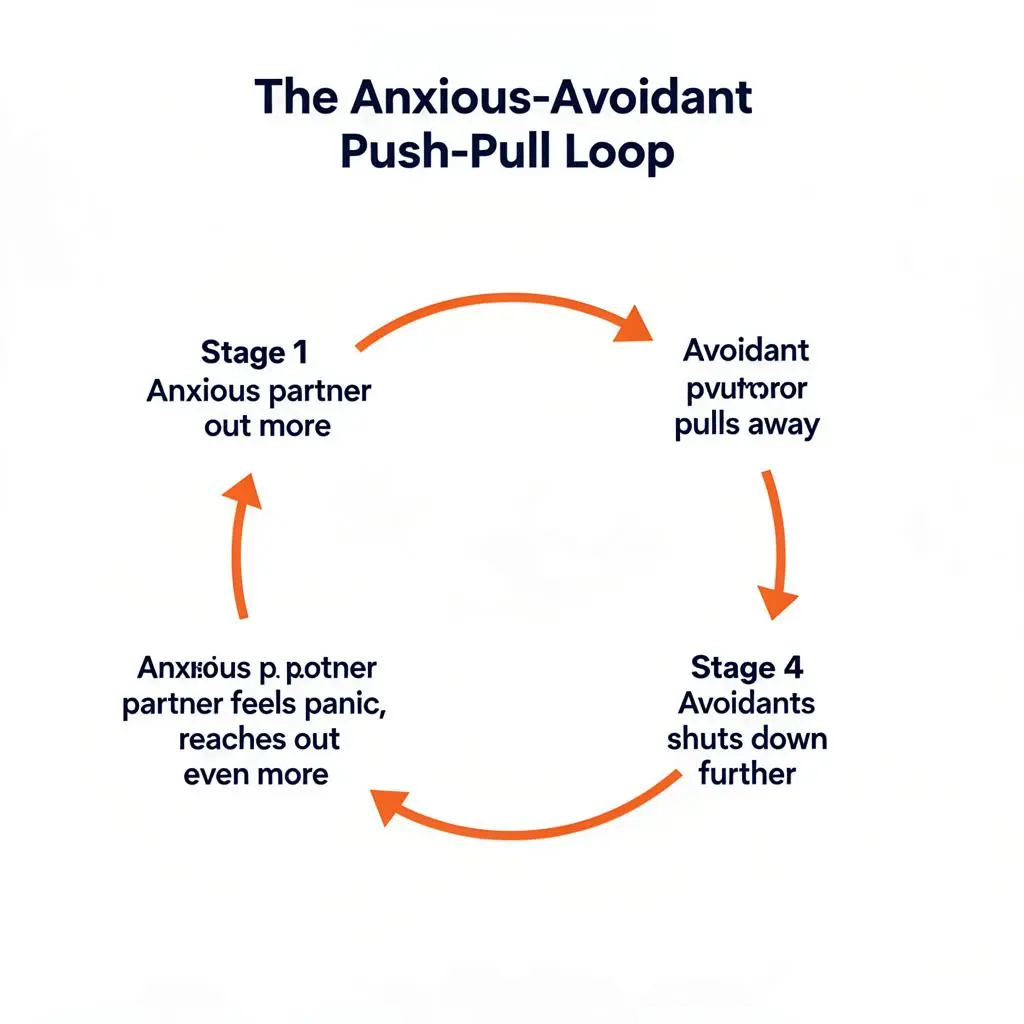
A common pattern is when an anxious person gets together with someone who doesn't want to be too close and tends to shut down or pull away.
The anxious person wants to be in touch with more people. The person who avoids pulls back to feel safe. The person who is worried feels more panic and reaches out even more. Both people feel stuck and like they don't understand each other.
What Research Shows
Studies on attachment have found that:
- Adults with high attachment anxiety often report more conflict and breakups.
- They also tend to show stronger stress responses in their bodies during relationship fights.
- The good news: attachment style can change over time. Supportive relationships and therapy can help people move toward a more secure style.
I hold onto this research because it supports what I've seen in the therapy room: people can and do heal.
How Healing Can Begin
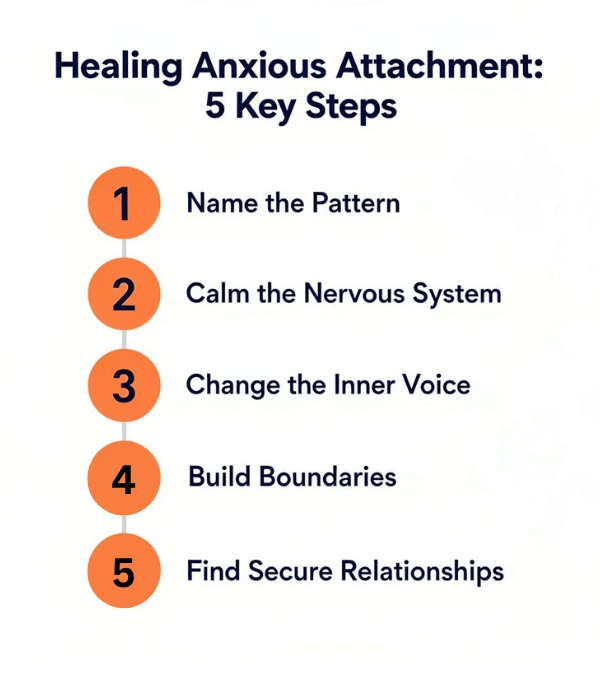
Healing anxious preoccupied attachment is not about becoming "less sensitive." It's about helping your mind and body feel safer, so they don't have to stay on high alert all the time.
Naming the Pattern
One of the first steps is simply naming what is happening: "My anxious attachment is activated right now." Saying this can create a tiny bit of space. Instead of "I am broken," it becomes "I have a pattern that makes sense given my past."
Calming the Nervous System
We also work directly with the body. Simple practices can help, like slowing your breath, feeling your feet on the floor, looking around the room and naming what you see, or placing a hand on your heart. These are small ways of telling your system, "Right now, in this moment, I am safe enough."
Changing the Inner Voice
In therapy, we listen for the harsh voice inside. When a trigger hits, you might hear, "Of course they're leaving. I'm too much."
We practice adding another voice: "My brain is going into abandonment mode. That makes sense, but it may not be the whole story." This new voice does not erase the old one overnight, but over time it can grow stronger.
Boundaries and Choices
For many people with anxious attachment, boundaries feel scary. You may fear that if you say no, ask for what you need, or slow down, the other person will leave.
Part of healing is learning two kinds of boundaries:
- With others: for example, "When you disappear without telling me, I feel very anxious. I need more communication."
- With yourself: for example, "I will wait 30 minutes before sending another text," or "I will not scroll through their social media tonight."
These are acts of care for your own nervous system.
Relationships That Support Healing
We can't heal attachment only in our heads. We heal it in relationships that are more secure. This might be with a partner, a friend, or in therapy.
We at Phoenix Rebellion Therapy think of therapy as a "practice relationship." You can see your anxious patterns with someone who won't judge you for having them. You can say, "I thought you were mad at me," and we can talk about it.
When you experience a relationship where your feelings are allowed, where repair is possible after misunderstandings, and where you are not rejected for needing reassurance, your system slowly learns a new way to be with others.
Living With Anxious Attachment While You Heal
Being healed doesn't mean you'll never feel anxious again. It means you have more options, more tools, and more knowledge.
As you go, it can help to:
- Be honest with yourself and safe people about your attachment pattern
- Notice your common triggers
- Appreciate small steps, like pausing before reacting
- Allow yourself to grieve the times you were not met the way you needed
At Phoenix Rebellion Therapy, we see this work as a gentle act of rebellion against the old idea that you have to earn love by suffering for it. You are not "too much" for wanting steady, caring connection. Your longing makes sense.
If you see yourself in this pattern, know that it's not your fault and that your story isn't over yet. You can learn to be safer, kinder, and more trusting in your relationships and in yourself over time.
Ready to Start Your Healing Journey?
Our therapists specialize in attachment work. Take the first step toward more secure, fulfilling relationships.
Schedule an Appointment