
We work with a lot of people carrying trauma, and it rarely looks like "trauma" from the outside. It often looks like a close family, a tight-knit community, a parent who "just cares a lot." But inside, you may feel like you're disappearing.
At Phoenix Rebellion Therapy in Murray and Kaysville, Utah, we see this every week. Here's what we want you to know.
What Enmeshment Really Is
Enmeshment is when there's too much emotional closeness and not enough separation.
In a healthy family, there are "walls with doors" between people:
- You care deeply about each other.
- You share a lot.
- But each person gets to have their own thoughts, feelings, and choices.
In an enmeshed family, those walls are more like thin curtains:
- Your feelings are everyone's business.
- Your choices are treated like a group project.
- Your loyalty is measured by how much you comply.
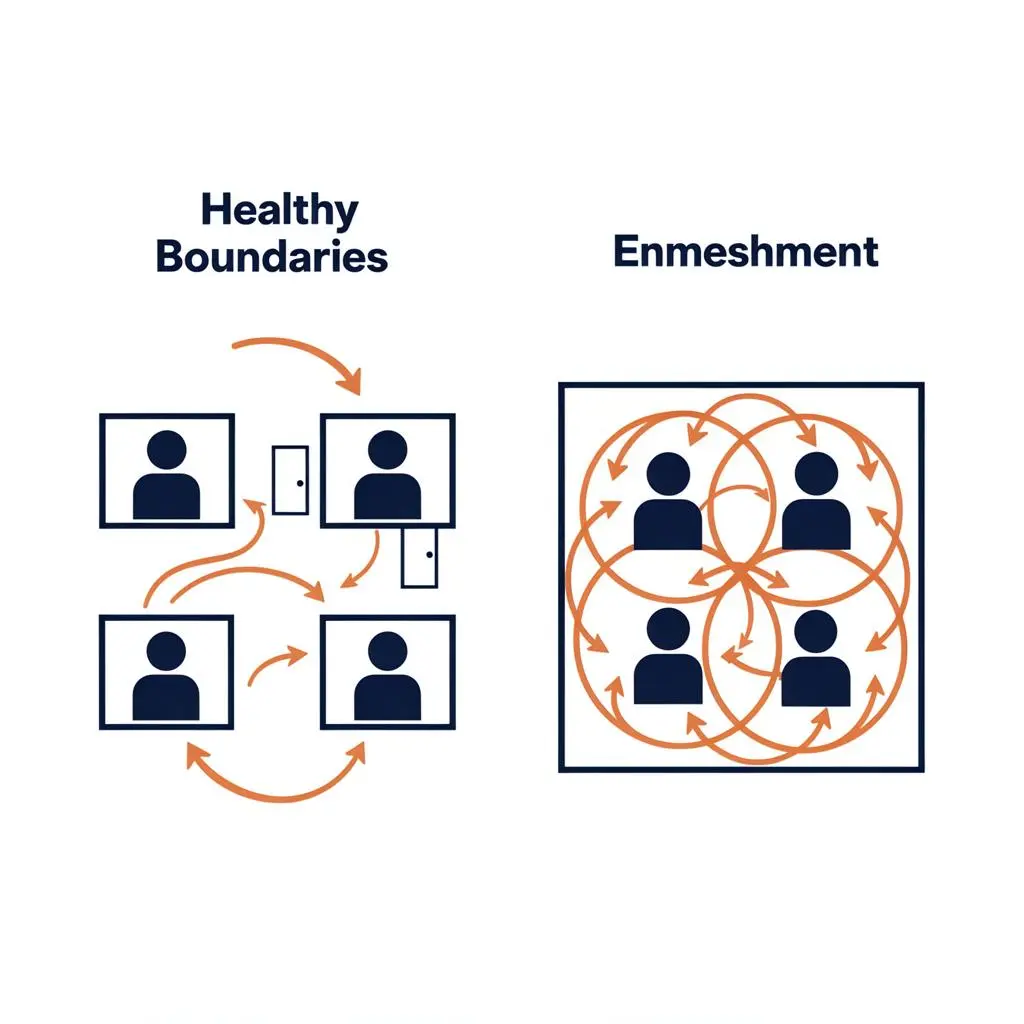
Over time, enmeshment steals your ability to know yourself. You learn to bend who you are to keep relationships.
How Enmeshment Feels From the Inside
People almost never walk in and say, "My family is enmeshed." They say things like:
As we unpack their stories, we often see:
You were emotional support for a parent.
You knew too much about their marriage, money, or emotional life. You were more like a therapist or partner than a child. You learned: My worth is in taking care of other people's feelings.
Privacy didn't really exist.
Journals, texts, or online accounts were checked "out of concern." You were expected to share everything. You learned: My inner world isn't mine.
Your feelings were corrected or merged with others'.
If your feelings didn't match the family's, they were dismissed or shamed. You learned to ask: What am I allowed to feel here?
Loyalty was everything.
Family, faith, and tradition were used to keep you in line. Questioning expectations was treated like betrayal. You learned: Safety = staying small and compliant.
What Enmeshment Does to Your Nervous System
Enmeshment isn't just a "difficult family dynamic." It becomes a survival pattern in your body.
We consistently see:
- Fight/flight/freeze around conflict or disapproval.
- Intense guilt or anxiety when you imagine saying no.
- A strong pull to fix, soothe, or over-explain, even when you did nothing wrong.
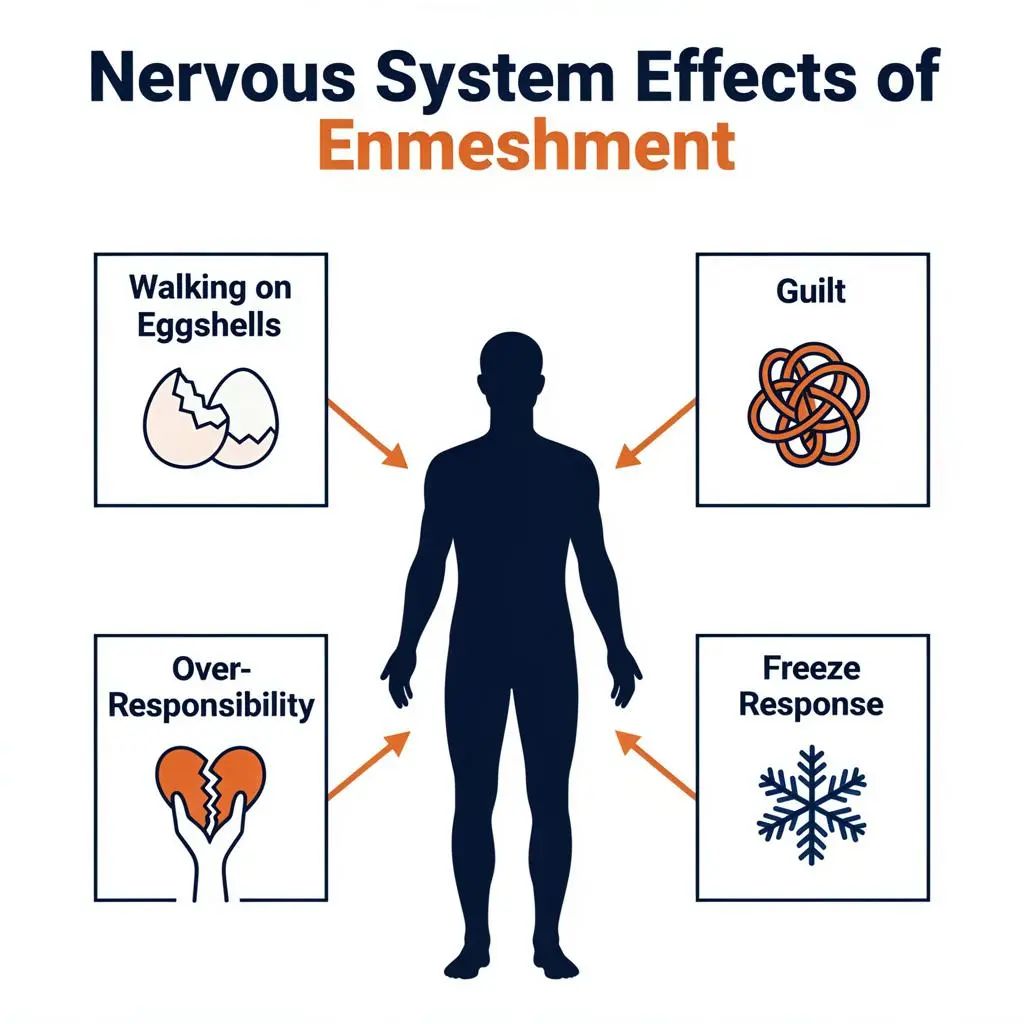
If your safety once depended on keeping everyone else emotionally okay, your brain learned: "Keep the peace. Don't rock the boat." This is similar to patterns described in our article on hypovigilance.
That was adaptation, not weakness.
How It Shows Up as an Adult
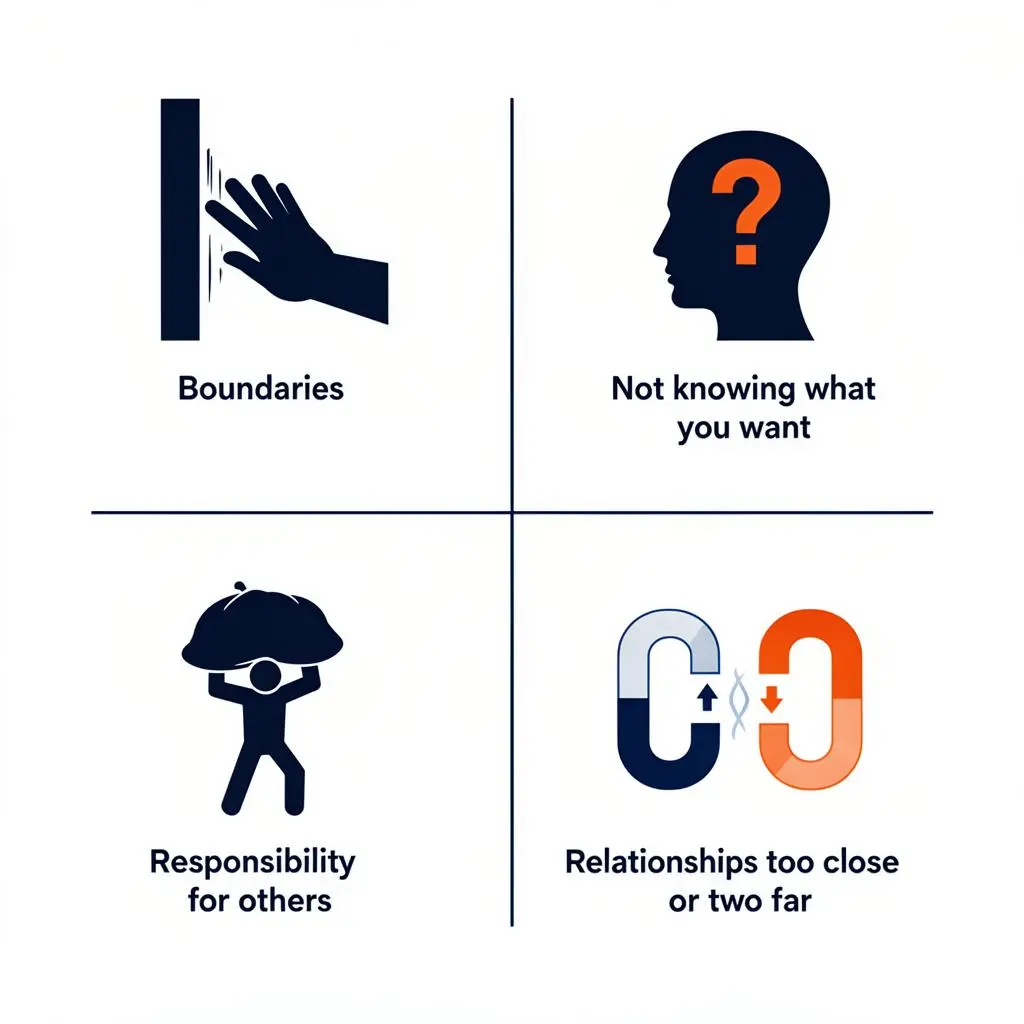
Boundaries feel wrong, even when they're healthy.
You say yes when you want to say no, then feel resentful and exhausted. If someone is disappointed, you backtrack or over-explain to prove you're still "good."
You don't know what you want.
When we ask, "What do you want?" we often get a long pause, or tears. You've spent years tuning in to others and tuning yourself out. This pattern frequently overlaps with dismissive avoidant attachment style or anxious preoccupied attachment style.
You feel responsible for other people's moods.
The inner equation is: They're upset → I did something wrong → I must fix it. You apologize, walk on eggshells, and scan everyone's emotions instead of noticing your own.
Relationships feel too close or too far.
You either merge and lose yourself, or you keep distance to avoid being swallowed. Healthy, steady connection can feel strange or even "boring" at first, because it's unfamiliar.
You Don't Have to Navigate This Alone
At Phoenix Rebellion Therapy, we help people understand enmeshment patterns and build a path toward healthy boundaries and self-trust.
Schedule an AppointmentWhy This Is Especially Tricky in Utah
Here in Utah, many of our clients' experiences of enmeshment are wrapped up in religion, culture, and ideas of what a "good" family should be.
We see:
- Strong values around family, sacrifice, and obedience.
- Deep fear of being seen as selfish, rebellious, or ungrateful.
Those values can be meaningful and beautiful. They can also be used to shut down boundaries:
You can honor your faith and culture and protect your mental health and autonomy. Those are not opposites.
What We Actually Do in Therapy
When we work with enmeshment trauma, we focus on a few key areas.
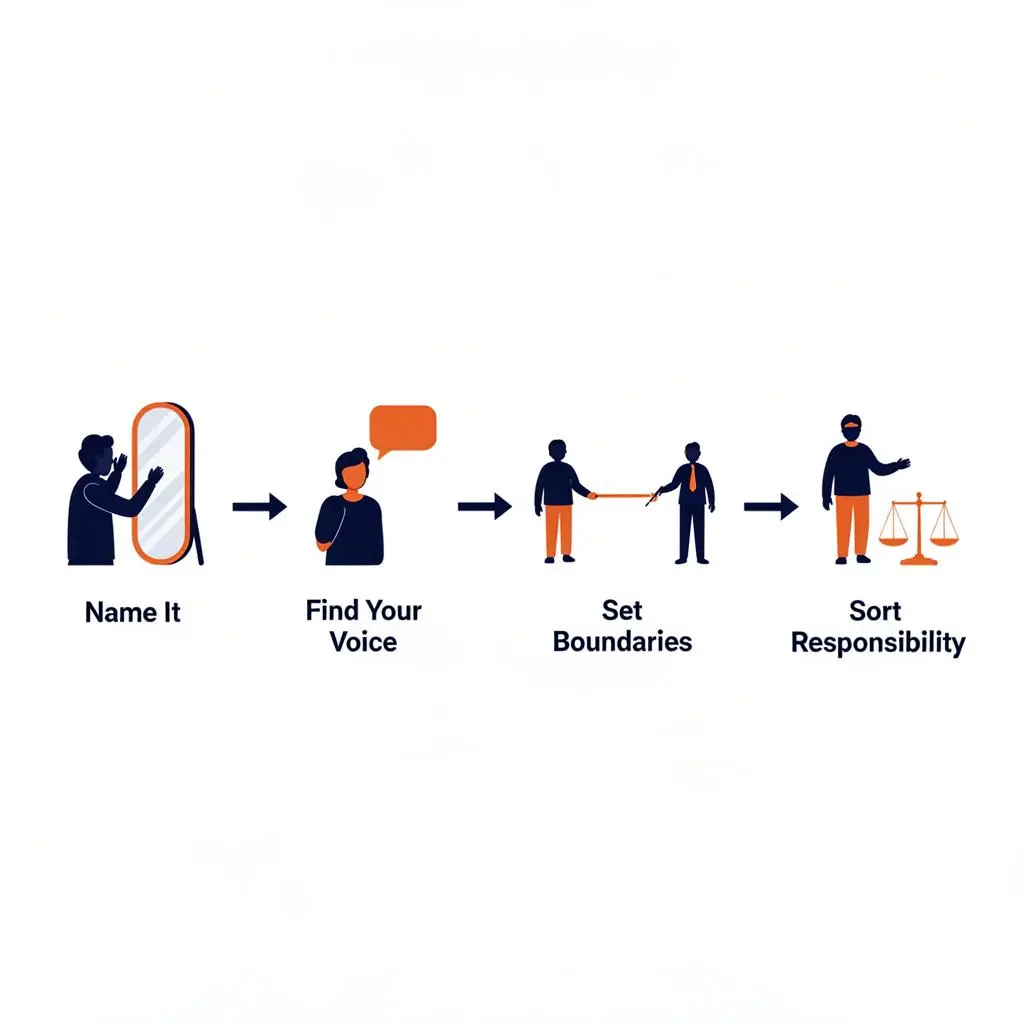
1. Naming what happened honestly.
We don't rush to "they meant well." We first say the thing out loud:
Being able to say "That was not okay" is often a turning point.
2. Helping you find your own voice.
We ask questions without an agenda:
We're not searching for the "right" answer, just your answer.
3. Practicing small, real boundaries.
We start with manageable steps:
- Delaying a response instead of replying immediately.
- Saying, "I can't talk right now; I'll call you later."
- Letting someone be a little disappointed without fixing it.
We expect guilt and anxiety to show up—and we treat those sensations as signs you're doing something new, not something wrong.
4. Sorting real vs. false responsibility.
We separate:
- Your actual responsibilities (your behavior, your choices).
- Other adults' responsibilities (their emotions, reactions, and life decisions).
Seeing that difference clearly is often freeing. Many clients also benefit from learning tools like those described in our article on cognitive behavioral therapy.
What Healing Can Look Like
Over time, we see changes like:
- You pause before automatically saying yes.
- You feel a bit less crushed by others' disappointment.
- You notice your own preferences more clearly.
- Being alone feels less like emptiness and more like space.
It's not linear. Old patterns show up under stress. That's expected. The work is learning to notice, be kind to yourself, and come back to your new way of being a little sooner each time.
If This Sounds Like You
If you see yourself in this, you're not dramatic, ungrateful, or selfish. You're someone who learned to survive by disappearing.
At Phoenix Rebellion Therapy in Murray and Kaysville, we sit with people like you every week. Enmeshment trauma is real, and it's workable. In therapy, you get a space where you are not responsible for managing anyone else's emotions, and where your experience doesn't get minimized.
You are allowed to exist as a separate person. You are allowed to have boundaries, privacy, and your own inner world.
That's not betrayal. That's healing.
Ready to Start Your Healing Journey?
We offer in-person sessions at both our Murray and Kaysville office locations, as well as virtual sessions over secure video conferencing from anywhere in Utah.
Schedule an Appointment